


Positive Comments: Proactive Adjustment and Strategic Transformation Lay the Foundation for Moutai’s Long-term Resilience
Although the simultaneous decline in Moutai’s price and stock price has shocked the market, the awareness of proactive adjustment and strategic transformation behind it actually lays a crucial foundation for the brand to navigate through market cycles. This “taking a step back to move forward” strategy reflects the clear – headed awareness and long – term thinking of a leading enterprise in times of crisis.
First of all, the “recuperation” strategy of proactively controlling shipments and relieving channel pressure lays the foundation for the healthy development of the channel ecosystem. As reported in the news, Moutai’s revenue growth rate in the third quarter was only 0.3%, and the contract liabilities decreased significantly year – on – year. This is not a passive “slowdown” but a deliberate move by the management to slow down the shipment rhythm and avoid forcing goods onto distributors. In the liquor industry, there has long been an unspoken rule of “pressing goods to maintain performance.” When distributors have high inventories, they are often forced to sell goods at low prices, leading to price collapses. By proactively “unloading the burden,” although Moutai’s short – term performance may look poor, it protects the distributors’ capital chain and confidence, leaving room for the future recovery of channel liquidity. As a distributor in the article said, “In previous years, large enterprises would order hundreds of cases at a time, but this year, it’s at most dozens of cases.” Under weak demand, forcing goods onto distributors will only accelerate the collapse of the channel. Moutai’s restraint is essentially “stopping the bleeding” during the industry adjustment period. This emphasis on the channel ecosystem is the key to the brand’s long – term stability.
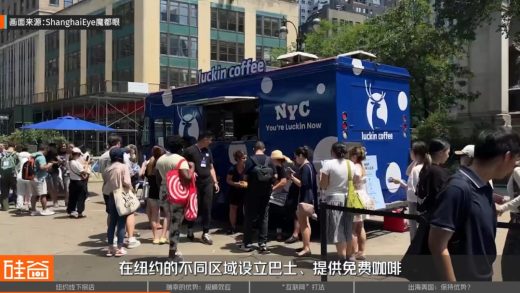
Secondly, the value reconstruction from the “financial attribute” to the “consumer attribute” is expected to enhance the anti – cycle ability. In the past, Moutai’s growth highly relied on its attributes as “social currency” and “investment product,” and its price bubble was filled with a large amount of speculative demand. The current price decline to the 2016 level is, to some extent, squeezing out the inflated financial premium and allowing Moutai to return to its essence as an “excellent consumer product.” When Feitian Moutai moves from “storage warehouses” to “dining tables among friends,” the authenticity and stability of its consumption scenarios will be significantly improved. As reported in the news, Moutai has tried to launch small – sized bottles, co – branded ice creams, and enter the wedding banquet market, and the proportion of customers under 45 years old has increased to 45%. These actions are precisely aimed at cultivating a new consumer base. If Moutai can successfully build a demand structure supported by daily consumption, young people, and emerging scenarios, it will reduce its excessive dependence on the business gift market, and its ability to resist economic fluctuations will be greatly enhanced.
Finally, the exploration of digital and experiential transformation provides an innovative model for traditional liquor enterprises. Although the revenue of the “i Moutai” platform declined by 57% in the third quarter, Moutai has not given up on the digital direction. Instead, it has promoted the compliance of traditional distributors to enter e – commerce platforms, attempting to integrate online and offline channels. This attitude of “taming rather than resisting” is more forward – looking than simply relying on high – price control in the offline market. In addition, the “Four – Master – One – Curator” service and the construction of cultural experience centers have upgraded liquor sales to “selling a lifestyle,” which meets the demand of the “experience economy” under the trend of consumption upgrading. Although these measures may not yield immediate results, they inject cultural added value and emotional connection into the brand, laying the foundation for future differentiated competition.
Negative Comments: Price System Collapse and Transformation Pains, Moutai Still Faces Multiple Challenges
Although Moutai has shown determination in adjustment, the complexity of its current predicament and the arduousness of transformation cannot be underestimated. The “breach” of the price system, the continuous weakness on the demand side, and the questionable implementation effect of transformation measures together constitute obstacles that Moutai can hardly overcome in the short term.
Firstly, the chain reaction of the price system collapse may damage the brand’s foundation. The wholesale price of loose bottles of Feitian Moutai has dropped by nearly 30% in half a year, and it has even fallen below the official guidance price to 1399 yuan. This not only causes losses for distributors who hoard goods but also seriously shakes consumers’ perception of its “high – end and scarce” brand image. The “social currency” attribute of liquor highly depends on price stability. When consumers find that Moutai can be “easily bought” and its price “keeps dropping,” its “face value” as a gift will be greatly reduced. What’s more troublesome is that the “hundred – billion subsidy” on e – commerce platforms has triggered a price war in the channel, intensifying the interest conflict between traditional distributors and online channels. If the price chaos cannot be quickly curbed, Moutai’s brand positioning as a “high – end liquor” may be completely undermined. As an industry insider said, “Price is the lifeline of liquor.” If Moutai cannot reshape the price order, even if the demand recovers in the future, its brand premium ability will be significantly weakened.
Secondly, the shrinkage of the core demand scenarios makes it difficult to repair the basic consumer base. Moutai’s past growth engines, namely government and business consumption and the high – end gift market, have been continuously sluggish due to the deepening of the “alcohol – prohibition order” and the macro – economic environment. In the third quarter of 2025, the business consumption of high – end liquor decreased by 30% year – on – year, and the order volume from large enterprises has sharply decreased. This trend is unlikely to reverse in the short term. More importantly, although the acceptance of Moutai among young people has increased (the proportion of customers under 45 years old is 45%), the revenue contribution from new scenarios (such as wedding banquets and daily dinners) is still negligible, and the revenue of the series of liquors has even decreased by 33.7% year – on – year. This means that Moutai has not yet found a new growth pole to replace the traditional business demand, and the “window period” of the basic consumer base may last longer.
Thirdly, the implementation effect of transformation measures is questionable, and the attempts at “youth – orientation” and “experientialization” may become mere forms. The products such as small – sized bottles and ice creams launched by Moutai are more of marketing gimmicks than strategic products. Young consumers’ perception of Moutai still remains at the level of “liquor for the elders” and “high – priced liquor.” Relying solely on a few co – branded products is difficult to truly reach the consumption scenarios and emotional needs of Generation Z. Although the cultural experience centers and the “Four – Master – One – Curator” service have enhanced the sense of experience, they have not solved the core problem of “why young people should actively consume Moutai” – is it because of the taste, cultural identity, or social needs? If Moutai cannot establish a deep resonance with young people in brand communication, these measures may become formalities of “innovation for the sake of innovation.”
Suggestions for Entrepreneurs: Extracting Survival and Transformation Logic from Moutai’s Predicament
Moutai’s predicament and response as an industry leader provide multi – dimensional inspiration for entrepreneurs. Especially in dealing with market cycles, maintaining brand value, and promoting transformation and innovation, the following key experiences can be summarized:
Beware of “false prosperity” and build a basic consumer base based on real demand: Moutai’s lesson lies in its excessive dependence on financial attributes and speculative demand. When the external environment changes, the bubble of false “scarcity” quickly bursts. Entrepreneurs should learn from this and focus on users’ real needs, avoiding creating short – term growth through “hunger marketing” and “hoarding and speculation.” For example, consumer brands should pay attention to the actual use scenarios and repurchase rate of products, and technology companies need to verify the market implementation value of technologies, rather than relying on the “false boom” of capital or channels.
Channel management should “reserve strength” and avoid short – sighted goods – pressing: Moutai’s practice of proactively controlling shipments and relieving distributors’ pressure is essentially the principle of “channel health comes before short – term performance.” Entrepreneurs often fall into the trap of “pressing goods to boost sales volume” during the expansion period, resulting in channel inventory backlog and price system collapse. It is recommended to establish a dynamic inventory monitoring mechanism, adjust the shipment rhythm according to the terminal sales situation, share market data with distributors, and maintain long – term cooperative relationships. For example, fast – moving consumer goods companies can use digital tools to track terminal sales in real – time to avoid channel congestion.
Brand value is the “lifeline,” and the price system needs strict control: Moutai’s price chaos has directly damaged its high – end brand positioning. Entrepreneurs should attach importance to the stability of the price system. Whether it is a high – end brand or a mass brand, a clear price anchor should be established to avoid vicious competition between online and offline channels. For example, new consumer brands can use strategies such as “regional protection prices” and “channel – exclusive products” to prevent price chaos. At the same time, a bottom line should be set for promotional activities on e – commerce platforms to ensure that the brand’s image is not diluted by low prices.
Transformation needs to be in – depth, avoiding formal innovation: If Moutai’s youth – orientation attempts only stay at the product level (such as ice creams), it is difficult to truly reach the target users. When entrepreneurs promote transformation, they need to deeply study the underlying logic of users’ needs. For example, for the young group, their consumption scenarios (such as small gatherings and self – drinking), communication habits (such as social media and content marketing), and value identification (such as national trend and cultural confidence) should be analyzed, and then products, services, and brand stories should be designed. Transformation is not just about “launching a few new products” but “reconstructing the user relationship.”
Long – termism requires “strategic determination” to balance short – term pressure and long – term goals: Moutai’s management has withstood short – term performance pressure and chosen to “recuperate,” which reflects long – term thinking. When entrepreneurs face short – term performance requirements from capital or the market, they need to clarify the core strategic direction and avoid sacrificing long – term health for “good – looking data.” For example, “slow variables” such as R & D investment and user operation may not be reflected in revenue growth in the short term, but they are the core competitiveness for enterprises to navigate through market cycles.
Conclusion: Moutai’s predicament is essentially a battle of “value belief” reconstruction – the transformation from a “financial investment product” to an “excellent consumer product.” Although this process is painful, it lays the foundation for its long – term resilience in the future. For entrepreneurs, Moutai’s case warns us that in a rapidly changing market, only by returning to the essence of users, maintaining a healthy ecosystem, and maintaining strategic determination can we stand firm in market fluctuations and achieve true “cross – cycle” development.
- 创业热点晨报 | 2026年04月08日(周三):2026年大学生创新创业训练计划项目推荐排序公示、2026年大学生创新创业训练计划项目推荐排序公示
- 创业热点晨报 | 2026年04月07日(周二):最高扶持50万元!2026年湖北省大学生创业扶持项…、真金白银来啦!2026年湖北省大学生创业扶持项目今…
- 创业热点晨报 | 2026年04月06日(周一):真金白银来啦!2026年湖北省大学生创业扶持项目今…、真金白银来啦!2026年湖北省大学生创业扶持项目明…
- 创业热点晨报 | 2026年04月05日(周日):毛孩子也有搭子了——川大学生研发伴宠机器人,拿下全…、最高扶持50万元!2026年湖北省大学生创业扶持项…
- Startup Commentary”Three post-2005 entrepreneurs are reported to have secured a new financing of 350 million yuan.”