



Positive Comments: The popularity of Doubao AI phones has accelerated the integration of AI and mobile phones
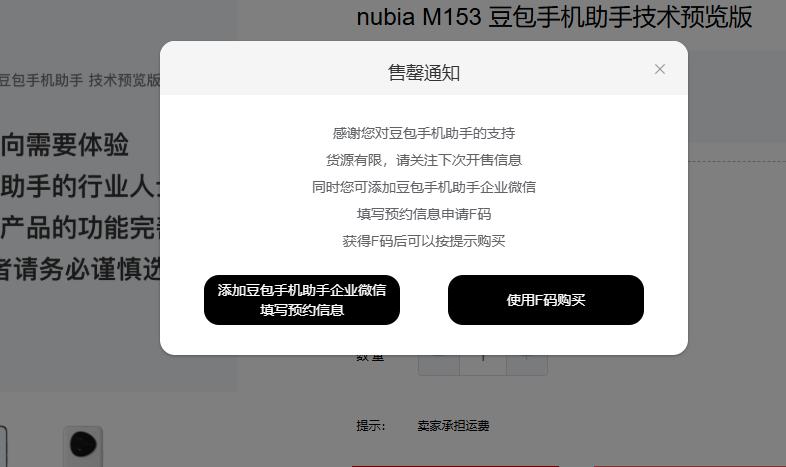
In December 2025, the sell – out of ZTE’s nubia M153 “Doubao AI Assistant” phone and its high – price circulation in the second – hand market became a phenomenon in the tech circle. This engineering prototype, officially defined as a “technology preview version”, was quickly sold out at the initial price of 3499 yuan. The price on the second – hand platform even climbed to 4599 yuan, and the F – codes were resold at a price of up to 100 yuan. On the surface, it seems to be a successful “hunger marketing” strategy, but in fact, it reflects the market potential and technological value of the integration of AI and mobile phones, sending multiple positive signals to the industry.
First of all, the popularity of Doubao AI phones validates the user demand and technological appeal of “AI mobile phone assistants”. In today’s era of highly homogeneous smartphone functions, users’ demand for a “smarter and more personalized” interactive experience is becoming increasingly urgent. As a mobile – end product of the large – model under ByteDance, Doubao AI Assistant’s functions such as “cross – application integration” and “natural language interaction” (e.g., ordering takeout or managing schedules with a single sentence) precisely meet users’ core needs for “full – scenario intelligent services”. The high – price circulation in the second – hand market essentially shows that users are willing to pay for the innovative concept of “AI – empowered mobile phones”, providing empirical data for the industry that “users are willing to pay for AI experiences”.
Secondly, the cooperation model between Doubao and ZTE provides a demonstration sample for the ecological cooperation between “Internet giants” and “mobile phone manufacturers”. For a long time, there has been a “game” in the AI field between mobile phone manufacturers (such as Huawei and Xiaomi) and Internet giants (such as ByteDance and Alibaba). Mobile phone manufacturers hope to control the core capabilities of end – side AI (such as operating system – level interaction), while Internet giants hope to penetrate user scenarios through large – model technologies. In this cooperation, Doubao is in charge of defining AI functions, and ZTE is responsible for hardware engineering. This division of labor not only leverages ByteDance’s advantages in large – model and application ecosystems but also preserves the mobile phone manufacturer’s dominance in hardware R & D, providing a reference for both parties to explore a cooperation path of “technological complementarity rather than competition”. If this model can be extended to more manufacturers in the future, it may promote the evolution of AI mobile phone assistants from “manufacturer – self – developed” to an “open ecosystem”.
Moreover, the popularity of Doubao AI phones forces the industry to accelerate the solution of key problems in “the integration of AI and mobile phones”. Although the official emphasizes that this is a “technology preview version”, the market’s enthusiasm has forced the industry chain to face the challenges of implementing AI mobile phone assistants, such as cross – application authorization, security standards, and system – level integration. As Zhou Wei, the dean of vivo’s Global AI Research Institute, said, “The distribution in the intelligent agent era requires security authorization standards.” The popularity of Doubao has brought these issues to the forefront, prompting mobile phone manufacturers, Internet application providers (such as Tencent and Meituan), and large – model manufacturers to jointly explore solutions. This “market – demand – driven industry cooperation” effect can accelerate the maturity of the industry more effectively than pure technological R & D.
Negative Comments: Hidden Worries Behind the Popularity, AI Mobile Phone Assistants Still Need to Overcome Three Hurdles
Although the “phenomenal” popularity of Doubao AI phones is exciting, a calm analysis reveals that its current success is more of a combination of “technological novelty – seeking” and “market sentiment”, and there is still a long way to go before it becomes a true “consumer – grade product”. From an industry perspective, this popularity exposes at least three hidden concerns.
Firstly, the ambiguous product positioning may lead to a gap between user expectations and experiences. The official clearly states that the nubia M153 is a “technology preview version only for industry insiders”, and it does not promise full – fledged functionality. However, the circulation in the second – hand market has attracted a large number of non – industry users. These users may purchase the phone because of the “AI assistant” promotion, but they may be disappointed with the imperfect functions (such as failed cross – application calls and response delays), which may affect the brand reputation of Doubao and ZTE. More importantly, if similar “technology preview versions” are over – packaged as “quasi – consumer – grade products”, it may erode users’ trust in AI mobile phone assistants and hinder the industry’s development.
Secondly, the complexity of ecological integration far exceeds expectations, and it is extremely difficult to implement Doubao’s “demonstration functions”. Although Doubao has demonstrated a wide range of cross – application services (such as ordering takeout and booking hotels), the implementation of these functions requires in – depth cooperation with Internet application manufacturers such as Alibaba, Tencent, and Meituan to obtain data access and operation authorization. Currently, the cooperation between mobile phone manufacturers and application providers is still in the exploratory stage. Mobile phone manufacturers tend to develop their own end – side AI models to control the user entry point, while application providers are worried that the “AI assistant” may become a new traffic distribution center, threatening their platform status. As a Morgan Stanley research report points out, “Deep system – level integration will touch on the core interests of mobile phone manufacturers.” If Doubao wants to truly achieve “full – scenario services”, it needs to find a better solution to “balance the interests of all parties”; otherwise, it may fall into the dilemma of “beautiful in demonstration but difficult in implementation”.
Thirdly, the intensifying industry competition may squeeze Doubao’s living space. Mainstream domestic mobile phone manufacturers (such as Huawei, Xiaomi, and Honor) have long been deploying their own AI assistants (such as Xiaoyi, Xiaoi, and YOYO) and integrating AI capabilities at the operating system level (such as Honor’s “ordering takeout with a single sentence”). These manufacturers have stronger control over end – side AI and have a complete hardware – software – service ecosystem, resulting in higher user stickiness. In contrast, as an “external large – model”, Doubao needs to be embedded in the mobile phone manufacturers’ systems through cooperation, and its function scope may be strictly limited (such as only opening some interfaces). If mobile phone manufacturers accelerate the development of their own large – models (such as Huawei’s Pangu large – model and Xiaomi’s ecological large – model), Doubao’s “external cooperation” model may face the risk of being marginalized.
Advice for Entrepreneurs: To Seize the AI Mobile Phone Opportunity, Find a Balance Among “Demand, Cooperation, and Risk”
The popularity of Doubao AI phones has injected confidence into the entrepreneurial direction of integrating AI and mobile phones, but it also reveals the complexity of the industry. For entrepreneurs targeting this field, the following advice is worth considering:
- Clarify product positioning and avoid confusing “technology preview” with “consumer – grade”: The case of Doubao shows that the market has a strong demand for AI mobile phone assistants, but users have limited tolerance for “imperfect products”. If entrepreneurs launch similar “technology preview version” products, they need to clearly define the function scope through clear promotion (such as website prompts and pre – purchase tests) to avoid negative reviews from ordinary users due to unmet expectations. At the same time, they can quickly iterate through “industry internal testing + user feedback” to accumulate experience for subsequent consumer – grade products.
- Promote ecological cooperation as a “complement” rather than a “competitor”: The core demands of mobile phone manufacturers and application providers for “AI assistants” are “controlling the user entry point” and “data security”. Entrepreneurs should focus on their own technological advantages (such as large – models for vertical scenarios and end – side inference optimization) and actively discuss “division – of – labor cooperation” models with mobile phone manufacturers and application providers. For example, they can provide large – model training support for mobile phone manufacturers or develop “AI – assistant – specific interfaces” for application providers instead of trying to replace existing ecological players.
- Pre – layout for “cross – application authorization” and “security standards”: The core value of AI mobile phone assistants lies in “full – scenario services”, but the key to achieving this goal is to solve the problems of cross – application authorization and security. Entrepreneurs can cooperate with industry institutions (such as the China Academy of Information and Communications Technology) to promote the formulation of relevant standards or cooperate with leading application providers (such as Meituan and Ctrip) to develop a “whitelist authorization” mechanism to reduce compliance risks in subsequent implementation.
- Pay attention to the “end – cloud collaboration” technology route: Mobile phone manufacturers prefer to develop their own end – side models to ensure response speed and data privacy, while Internet giants are good at the general capabilities of cloud – based large – models. Entrepreneurs can focus on the intermediate – layer technology of “end – cloud collaboration” (such as end – side model compression and lightweight invocation of cloud – based large – models) to provide mobile phone manufacturers with solutions that “preserve end – side control while enjoying the capabilities of large – models”, reducing the cooperation threshold.
- Be vigilant against the short – term interference of “phenomenal popularity” and focus on long – term value: The high price of Doubao phones in the second – hand market may be a short – term emotional outburst of the market for AI mobile phones. Entrepreneurs should avoid being misled by this “false prosperity” and blindly increasing investment. They should return to users’ real needs (such as “intelligent services for high – frequency scenarios” and “personalized interaction”), verify the long – term value of the technological direction through user research and data, and ensure that product iteration is in line with market demand.
Conclusion: The popularity of Doubao AI phones is both a “touchstone” for the integration of AI and mobile phones and a “catalyst” for the industry’s development. It shows us users’ desire for intelligent experiences and reveals the complexity of ecological integration. For entrepreneurs, the significance of this upsurge is not only about “jumping on the bandwagon” but also about understanding the triangular relationship among “demand, technology, and ecosystem” and finding their own breakthrough points between innovation and stability. Only in this way can AI mobile phone assistants truly evolve from “technology preview” to “universal adoption”, opening a new golden era for smartphones.
- 创业热点晨报 | 2026年04月08日(周三):2026年大学生创新创业训练计划项目推荐排序公示、2026年大学生创新创业训练计划项目推荐排序公示
- 创业热点晨报 | 2026年04月07日(周二):最高扶持50万元!2026年湖北省大学生创业扶持项…、真金白银来啦!2026年湖北省大学生创业扶持项目今…
- 创业热点晨报 | 2026年04月06日(周一):真金白银来啦!2026年湖北省大学生创业扶持项目今…、真金白银来啦!2026年湖北省大学生创业扶持项目明…
- 创业热点晨报 | 2026年04月05日(周日):毛孩子也有搭子了——川大学生研发伴宠机器人,拿下全…、最高扶持50万元!2026年湖北省大学生创业扶持项…
- Startup Commentary”Three post-2005 entrepreneurs are reported to have secured a new financing of 350 million yuan.”